
With the law on digital markets adopted in 2022, the European Union has identified Apple iOS (as well as other companies of companies) as “guards” who have such a maintenance on the market that they should be required to comply with certain rules concerning interoperability and openness to competing software and services.
Users from Europe have already seen results. Compared to iPhones in the rest of the world, iOS in Europe offers unique capacities: EU users can lake applications and use alternative application stores, access various payment processors with Apple Pay, using Apple applications does not authorize elsewhere, such as Bittorrent customers and clipboard managers, and can define default applications for a variety of common telephone.
Apple has always insisted on the fact that these changes compromise the confidentiality and safety of their user, harm the user experience and hinder Apple's ability to make excellent products. Until now, changes do not seem to have had such a deleterious effect, but the EU says that Apple is not entirely in line with the law on digital markets and has ordered that Apple provides new specific modifications to comply with its interoperability directives.
There are two new guidelines (DMA. 100203 and DMA.100204). We specify the ways in which Apple must create better interoperability with third party applications, services and devices. The other details how Apple must communicate and administer its interoperability functions to developers.
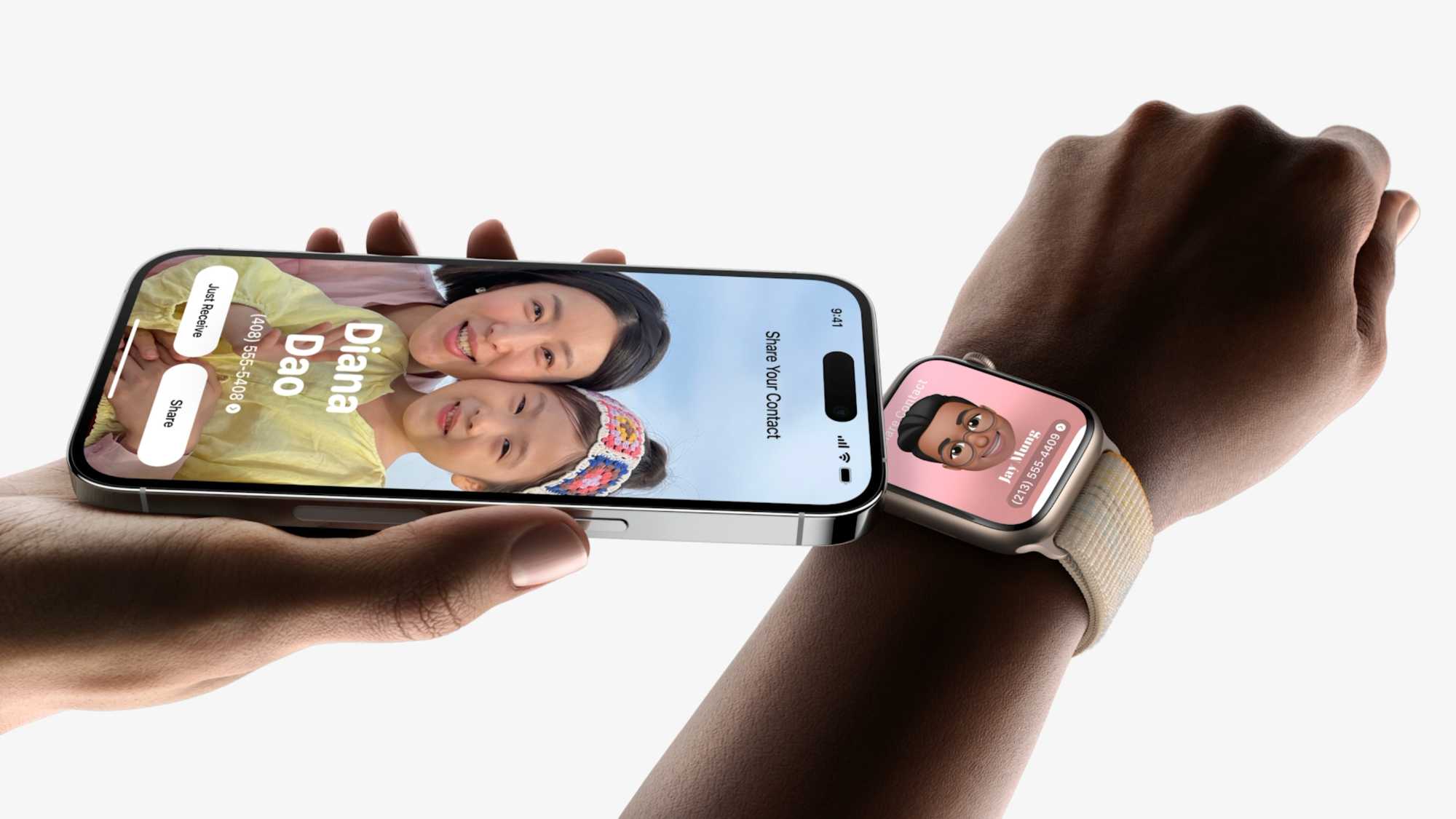
New EU rules may force Apple to open Bluetooth and NFC features to third -party developers.
Foundry
Here is how the European Commission described the functionality changes that Apple must bring to improve interoperability:
- IOS notifications: Allows connected devices, such as smart watches, to show and react to iOS notifications.
- Fundamental execution: Perform certain actions compared to the physical devices connected “in the background”, that is to say without the user looking directly at the application. For example, the iPhone can recover the latest weather information and synchronize it on a smartwatch, without the need for an active user interaction.
- Automatic audio switching: Allows users to switch between two devices, for example between a smartphone and a computer, when listening to audio with supported headphones.
- Wi-fi peer-to-peer connections with high bandwidth: Establish a wide-band Wi-Fi between an iOS device and connected physical devices. This high -speed connection can be used to share large files between two devices, or to launch on an iPhone which can be seen on Virturious RGeneral Eality.
- Creately -reaching wireless file transfers: Allows devices to access the same functionality controlled by iOS as Apple services in third -party file sharing applications, for example, creating alternatives to Airdrop.
- Media casting: Allows developers to develop an alternative media molding solution to disseminate by granting them access to software functionalities required in a non -discriminatory manner to disseminate.
- NFC controllers: Allows applications on an iPhone to communicate with connected devices, such as rings or bracelets, to provide them with information such as the details of the user's payment card. The end user can then use the ring or bracelet in a store to carry out payment transactions as with a payment card without the presence of the iPhone. In addition, physical smart cards can easily be read for example to activate or secure mobile banking services.
- Payroll triggered by proximity: Allows connected physical devices to associate with an iOS device via a simplified procedure. For example, when the user brings a new helmet near the iPhone, he should be able to couple immediately through a simple and rationalized procedure, regardless of whether the helmet is an Apple product or a third -party brand.
- Automatic Wi-Fi: Allows devices to access information on local Wi-Fi registered Wi-Fi on the iPhone and connected physical devices to reach these networks transparently.
In other words, third party headphones must be able to provide the same proximity and automatic audio switching switching as the AirPods. Non -papple devices must be able to show and react to notifications like Apple products (it's a big for third -party watches, like the new pebble). Developers must be authorized to develop and publish alternatives to Airdrop and Airplay which are not paralyzing in relation to Apple solutions. And Apple must completely open its NFC implementation.
The EU also specifies that Apple must allow interoperability functionalities via complete, free and well -documented APIs, that they must be just as effective as the solutions that Apple uses (more “Apple can not use functions that no one else can”), and Apple must make new features in these categories of interoperability available for third parties at the same time as they are available for Apple.
If you are enthusiastic about the prospect of third -party equipment that works better with your iPhone, you should know that these features are only necessary on the iPhones sold within the European Union. Already, iOS has access and opening in the EU that it does not do in other places. Apple can make some of these changes on a global scale, but so far, its DMA compliance measures have been exclusive to iOS users within the EU.
Apple response
Naturally, Apple is not satisfied with it. Whenever a court or a government indicates to Apple what it must do, the company repels hard, claiming that compliance will cause irreparable damage to users. In a declaration to several media sites, Apple said:
“”Today's decisions envelop us in administrative formalities, slowing Apple's ability to innovate for users in Europe and forcing us to give our new features to companies that do not have to play according to the same rules. It is bad for our products and for our European users. We will continue to work with the European Commission to help them understand our concerns on behalf of our users.“”


