
Apple has big plans for the smart home in 2025. After long battling limited device support and complex standards, the company wants to move forward with simplified platforms, deeper integration of improved devices and software. This change in strategy aims to strengthen the Apple ecosystem and make it competitive at a time when the industry as a whole is pinning its hopes on Matter and Thread to revive a faltering market.
In this article, we outline Apple's smart home strategy for 2025 and explain what it means for the HomePod line.
The smart and transparent home
Apple plans to significantly expand compatibility with cross-industry standards in 2025. Apple already supports the universal Matter standard, which makes it easier for you to use a wide variety of smart home products from different manufacturers. The Eve and Nanoleaf brands, well established in the Apple ecosystem, were among the first to jump on the train, and others are gradually being added.
In doing so, Apple is breaking away from previous restrictions and opening its platform to a wider range of devices. But it will also make it much easier for users to choose which manufacturers they want to buy from and find the most beneficial choice. This can be a double-edged sword, as Apple is rarely the cheapest option.
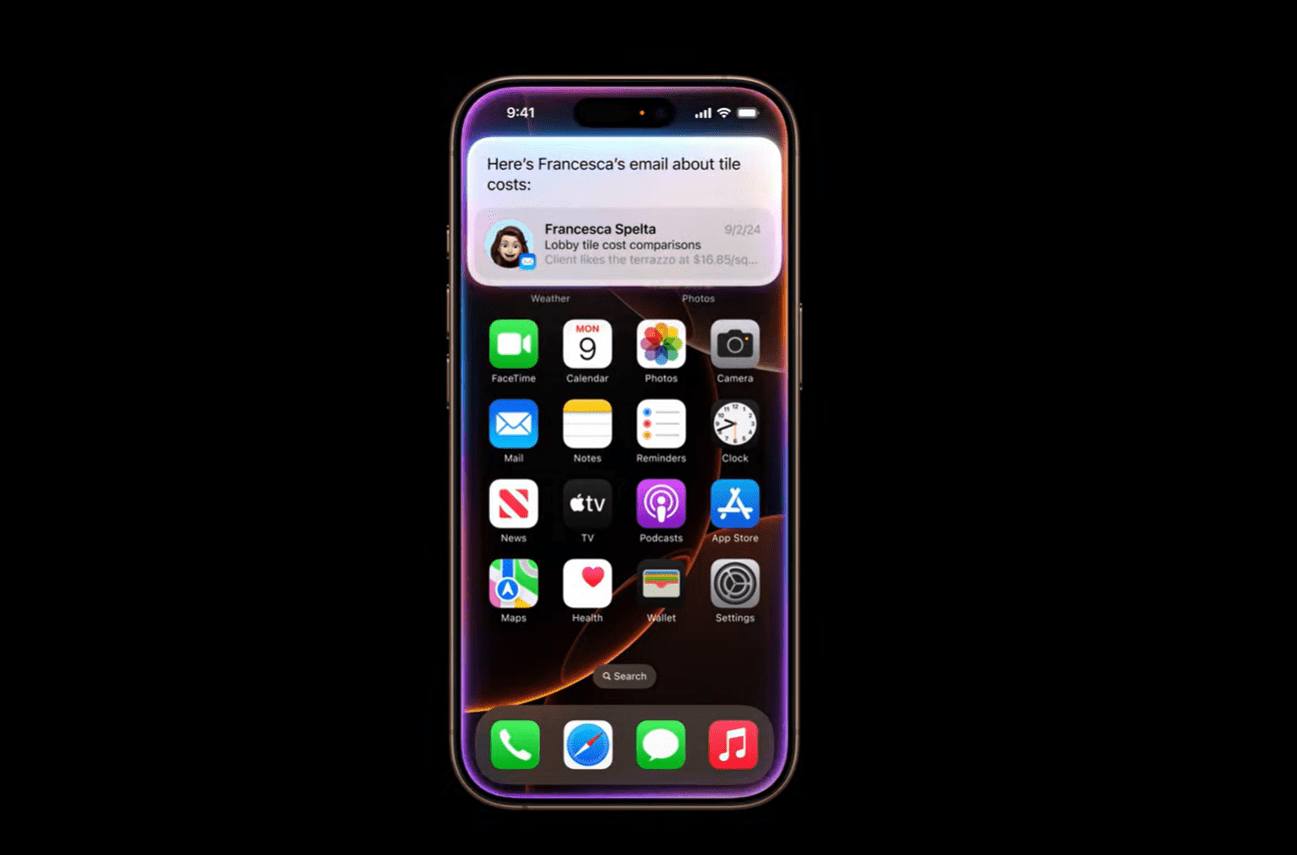
Apple Intelligence is also a central part of the new strategy. This AI-powered technology is designed to understand commands, respond flexibly, and perform complex tasks. It is intended to improve Siri so that the voice assistant can better implement contextualized commands. The goal is a true smart home experience where your devices efficiently respond to your needs and work together seamlessly.
YouTube/Apple
There's no place like homeOS
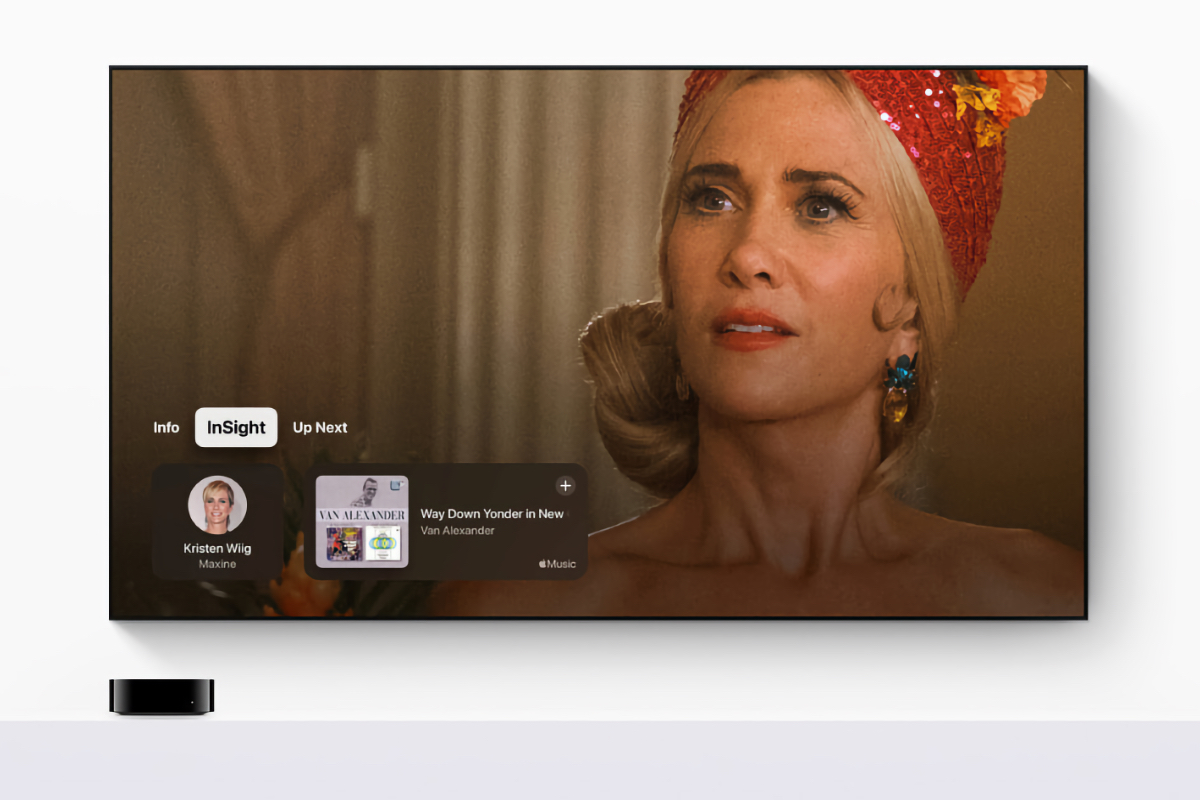
A key element of the new strategy is the introduction of homeOS. This operating system is intended to bring together several ranges of hardware and form the basis of a standardized smart home. Currently, the Apple TV runs tvOS in the background, while the HomePod runs custom software. In the future, homeOS could serve as a common platform providing updates and features more quickly.
The new homeOS software won't be limited to HomePod and Apple TV: it will also play a role in new device categories. These could include fixed smart displays that allow you to control your home devices in a more direct and intuitive way, instead of using the fiddly controls of an iPhone, iPad or Apple TV. This would benefit both HomePod and HomePod mini: the more devices that are controlled via homeOS, the more seamlessly your HomePod integrates into the overall experience.
But one question remains unanswered: what will the smart screen offer that cannot already be achieved with a (cheap) iPad?
Apple
Where does that leave the HomePod?
The HomePod range has barely evolved since the launch of the original model. Although there have been software updates, there have been no real hardware innovations. We don't even want to talk about the 2nd generation HomePod; There has rarely been such a loveless relaunch of an Apple product.
However, under the new strategy, Apple could give more importance to HomePod and HomePod mini.
In the future, HomePod should be able to handle Apple Intelligence. This is not yet the case, because the hardware requirements are high and HomePods are controlled by lower-power chips from the Apple Watch line. But Apple will likely equip future generations of HomePods with more powerful chips to process complex local commands. This would allow Siri to respond more intelligently on the HomePod without the delays caused by cloud processing, and would allow Apple to address the HomePod's biggest weakness: its limited voice assistance.
The next generation of HomePod mini should also benefit from the new strategies. Improved processors and optimized wireless standards such as Wi-Fi 6E should reduce response times and make operation smoother and more intuitive. Apple may also upgrade its sensor technology to better capture environmental data, which would make it easier to use an updated HomePod mini as a smart hub.
Another factor concerns the new screens. Apple is reportedly working on HomePod variants with a built-in display, and while these won't appear for a while, they could significantly improve the HomePod family. With a screen, the speakers could be used much more flexibly, for example for video calls or to display camera images. The idea is not entirely new; Amazon has had the Echo Show for a long time.
The smart home of the future
Support for Matter, the introduction of homeOS, and deeper integration of Apple Intelligence into Siri will advance Apple's smart home ecosystem. For the HomePod and HomePod mini, this means a long-awaited upgrade.
While Siri was previously considered a weak point, better hardware, AI features, and a simplified software platform could turn the HomePod into a valuable home hub in the future. Although new HomePods with significantly improved screens and hardware may not launch until 2025, Apple is laying the groundwork for a more powerful smart home offering.
This article was originally published on our sister publication Macwelt and has been translated and localized from German.
Table of Contents


