
Over the past 10 years, Apple has generally stuck to predictable and safe devices, avoiding new major radical launches or changes that may not be firmly reliable. However, industry rivals sometimes push Apple out of its comfort zone, especially when shareholders require similar innovations.
The iPhone and iPad excels in their respective tasks in their classic slab factors. But times change, and Apple would work on a variety of foldable models – with the first models, an 8 -inch iPhone and a huge 19 -inch iPad that will arrive next year. Although it may seem exciting to imagine what an iPhone or a folding iPad might look like, this is the last thing Apple needs.
Pay more for less
Before Apple launched its first foldable devices, the iPhone 17 air could give us an overview of the general folding formula later this year. Apple is supposed to work on the air of the iPhone 17 to experiment with thin devices because a foldable iPhone or iPad should be significantly thin when open to maintain the elegant form of Apple when folded.
However, the new aerial model would have cost at least $ 100 more than the ordinary iPhone 17, although it is less capable. To obtain its exceptionally thin design, Apple should exclude the flagship advantages, including an ultra-related back lens, a physical sim card slot on international markets, a pro chip, stereo speakers, a certain battery capacity and other features. Thus, you will mainly pay more for a more recent design with mid -range specifications.
A recent report specifies some of the similar drawbacks of the iPhone. Analyst Ming-Chi Kuo estimates that the 7.8-inch foldable iPhone of next year will cost at least $ 2,000 and may even cross the $ 2,500 mark. In addition to the above compromises, some of which are likely to make their way in a folding phone, Kuo notes that the phone will offer a tactile identification sensor – a significant degradation of the identification of the face. So you will give up a lot just to get a little more screen.

If you can get an iPhone with an iPad for less than the price of a folding phone, what is the interest.
Foundry
A flop of turning
Now, some may argue that a folding iPhone is worth the higher price. Maybe you've seen the Samsung Z Flip and Z Fgg devices and you feel like you miss. And yes, they are cool and fun during the first days, but after having used a for a while, I did not find that they had approached existing smartphone faults or served a significant objective. The concept is cool, but unless Apple can understand a killer application, I think that a folding iPhone should remain a prototype.
For example, the Z FLIP-Circle-Closed form factor offers two main advantages: a more pocket size and a remote shooting. Well, even the biggest iPhone 16 Pro Max is already in most pockets, and you can use it for hands -free photography using the Apple Watch integrated camera remote control and a basic quay. Thus, a folding iPhone would only do what the iPhone can already do in a different way.

The Samsung Z Flip looks cool but the folding screen is a party tip.
Mattias Inghe
The design of the fold Z is not worth it, because the display of the iPhone Pro Max is immersive enough for a visualization on the go for most users. Without forgetting that the purchase of an iPhone and an iPad separately would actually be a cheapermore sustainable investment. And in addition, most people use their Apple devices interchangeably when one of them loads, updates or out of reach, so two are better than one.
Meanwhile, the foldable iPad would perform a new operating system, perhaps even a tactile version of macOS. This is something that Apple fans wanted forever, but there are apparently no technological constraints preventing Apple from bringing MacOS to the iPad right away. And if there are any, a hinge will not repair them.
The iPad Pro already wraps a large screen, the capable M4 M4 chip, and offers a MacBook type attachment, so making it foldable does not serve any objective of legitimate productivity on a tablet other than portability. A more powerful operating system would be great, but if it is limited to the folding phone at high prices, it would essentially make the iPad out of words.
Look at the next -grid take place
If you are still not convinced now, you may also want to consider the sustainability of these devices. Almost all the folds on the market develop a form of fold over time. Although a report says that Apple works to understand this one, the form factor will undoubtedly introduce new challenges. Given the sensitivity of these devices, fold them several times, tens or hundreds of times a day, he will eventually break something inside.
Remember the Apple Magsafe duo charger? It was far from being as technologically complex as a folding phone, and it broke down after about 200 times. It has not completely reached the level of antennagate or bendgate, but a folding iPhone with an exploded hinge would do it absolutely. Even with rigorous tests, which guarantees internal components beyond the display itself will not wear out when users fold and depolish their iPads or iPads repeatedly? This is a problem that you do not have with the current range of devices.
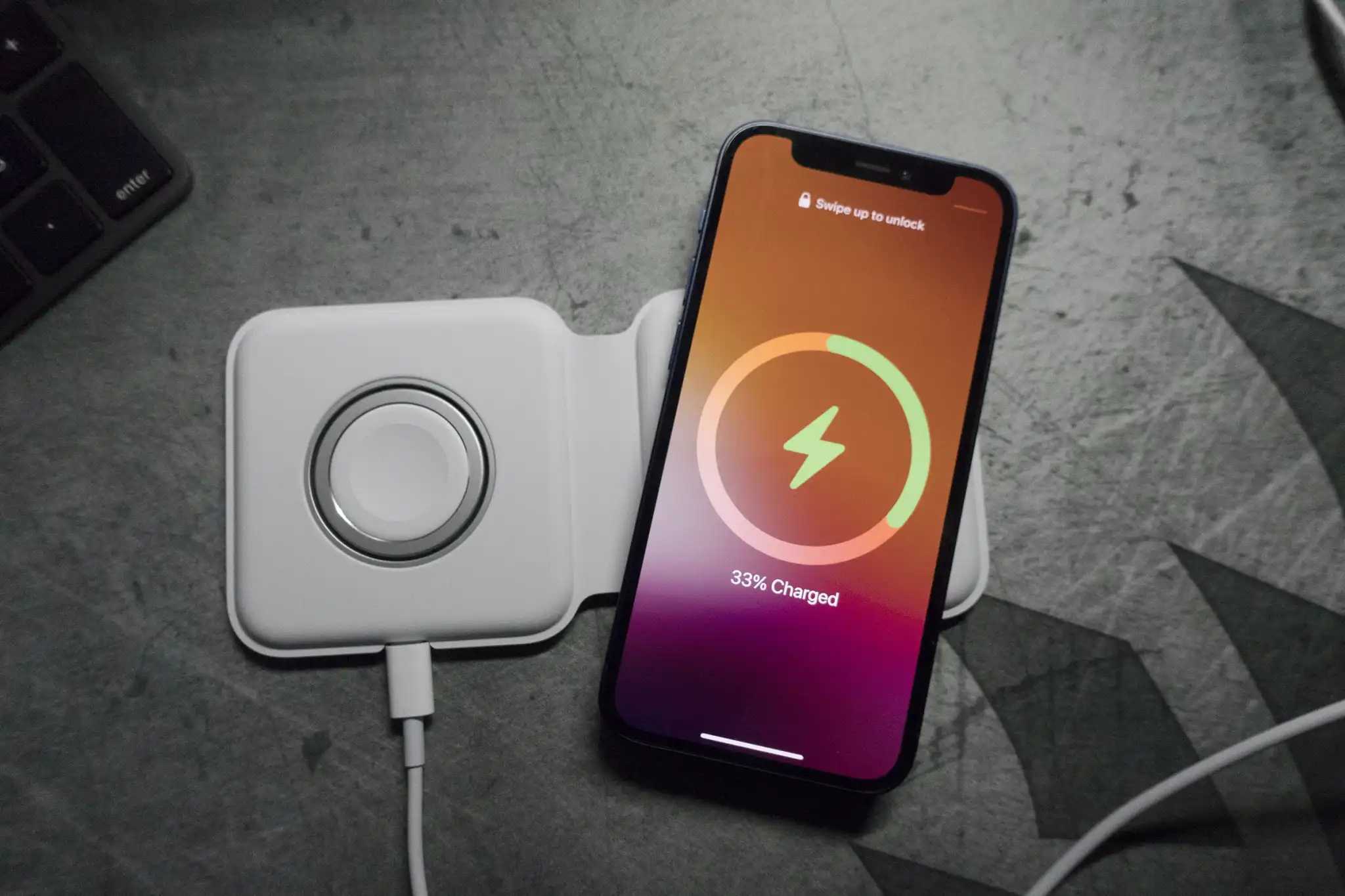
The hinge of the Magsafe duo does not hold exactly to wear.
Foundry
Do not bend under pressure, apple
Due to the pressure of shareholders and competitors, Apple Intelligence was revealed during WWDC last year. Almost a year later, the project remains indefinitely delayed and the new generation SIRI can be delayed by at least a year. If there had not been the aforementioned catalysts, I am sure that the company would not have announced these features of AI before the Dub Dub this year or even the following.
Apple should learn from Apple’s intelligence accident to stick to its mission and avoid external influence. Android phone brands have long experienced all kinds of eccentric gadgets, and most of them end up going out. As much as some companies hope that foldables will be the next evolution of smartphones, statistics simply prove the opposite.
Traditional foldables have existed for half a decade, but only about 1% of users have adopted them. They are generally too expensive and riddled with faults, and above all, they fail to raise the experience of the smartphone. Apple should know better.
Table of Contents


