
You will often hear people complain that Apple's “luxury gadgets” are too expensive for them. If they talk about an iphone 16 pro max of $ 1,599 or an ipad pro of $ 2,299, this point of view is understandable. But strictly speaking, even Apple's most expensive pro devices are premium products, not luxury. There is a big difference.
Do you want to see a real luxury product? How about a Gucci jacket of $ 8,900. Or a Dior bag at $ 10,000. Or an Apple Watch of $ 17,000. Real luxury concerns exclusivity and as much the number of people who don't do it Buy your product. But with more than 200 million iPhones sold per year, the luxury niche tag is simply no longer applicable to Apple.
Take the new iphone 16th of $ 599. It is a solid smartphone but equipped by Spartanly with an older design and a single camera (which does not offer a real optical zoom, whatever the frequency to which Apple claims it). The 16th is not a luxury product. This is part of an increasing group of Apple devices that aim to please a mass market in search of a beautiful product at a decent price. It's J. Crew, not Cartier.
Of all Apple products, only a handful – the iPad Pro, Mac Pro, iPhone 16 Pro Max – can really be described as premium. In addition to Apple's brand image and the right design, the iPhone Pro and the iPad Pro offer exceptional performance and ease of use. And the video of the video or the developer of apps that spends large for a Mac Pro can be sure that they will obtain high stability and first class equipment in return. But it is difficult to find luxury in a product that essentially offers the same experience as that which costs thousands of people.
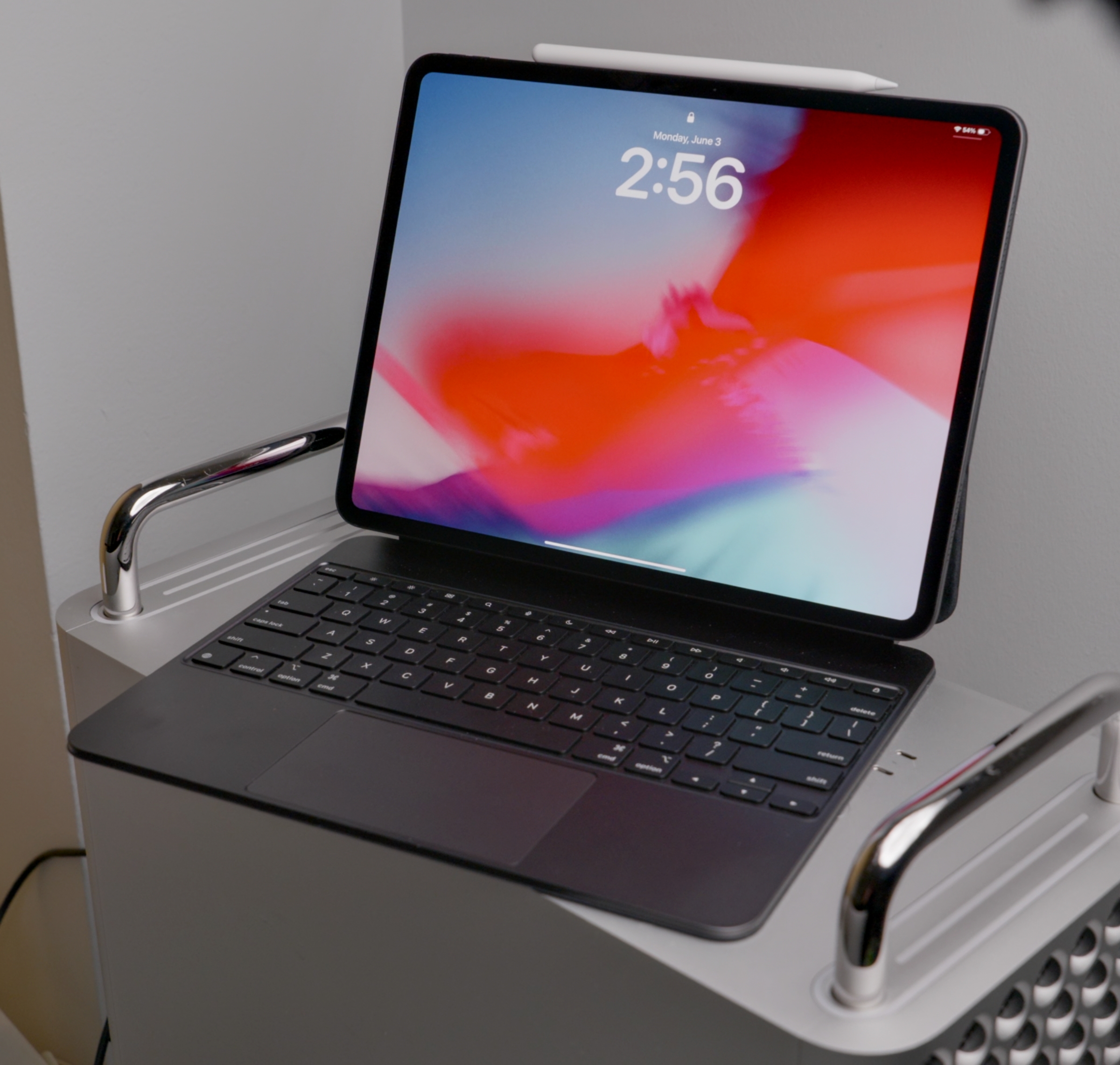
The iPad Pro and the Mac Pro are some of the few premium Apple products still.
Thiago Trevisan / Foundry
Is Apple still a premium manufacturer?
Apple is launching more and more affordable products each year. Although they are first -class products, they aim more for the mass market and are much cheaper than other Apple products.
- The M4 Mac Mini is often available for its $ 599 / £ 599 PDSF. Even at full price, it is an excellent deal, but despite its many forces, it is hardly a premium computer.
- The Apple Watch is not a luxury smartwatch, and it cannot even be described as premium compared to the Apple Watch Series 10. But you can take one for as little as $ 199 / £ 189. It is mainly intended for young family members who join the world of apples at an early age.
- A mini colorful homepod is available for only $ 99, $ 250 less than the classic HomePod. This cute intelligent speaker has its charms even if the audio quality is relatively low in bass.
- The current Apple TV offers first -class homemade film experience, voice control and intuitive remote control for $ 129.
- AirPods 4 offers an AirPods level sound quality with ANC for $ 179.
- At $ 349 (and often on sale), the 10th generation iPad is clearly intended for budget buyers. It costs almost a thousand dollars less than the 13 -inch iPad Pro.
Apple had to make a decision years ago. Should he remain a manufacturer of pure bonuses, a kind of Porsche among the manufacturers of consumer technologies, by offering only the best to people wishing to pay for this? This would have been risky because it would mean that the company's survival hooks the success of a very small number of high prices products. (In illustration of these risks, product development errors currently cause serious difficulties from the German sports car manufacturer.) Thus, Apple has therefore chosen a different path.

The iPhone 16th is another product for a mass market, not a luxury.
Foundry
Less luxury, more shipping
Apple has obviously decided to become a mass manufacturer offering a wide range of products that are aimed at all income tranches. Premium devices such as the iPhone 16 Pro Max can provide the largest profit margin, but less profitable devices such as the iPhone 16th guarantee a large number of users. This leads in turn to strong income thanks to services such as iCloud +, Applecare +, Apple Music, Apple Pay and, finally, the App Store. Even growth regions like India cannot be won over with premium devices alone.
A large clientele brings another advantage: economies of scale. The higher the turnover, the higher the number of shipments, the more advantages in areas such as development and marketing. It is little logical to develop your own iPhone operating processors and operating systems for a few customers. But if you sell 230 million smartphones per year, you can negotiate completely different conditions with companies like TSMC.
It is possible that this strategic change has consequences: Apple could see that the premium part of its brand decreases in the years to come because people choose the value rather than the premium. But I bet that Apple will be very good with that.
This article originally appeared in our Sister Macwelt publication and was translated and located in German.


