
More than four years ago, Apple announced that it would stop using Intel processors in its Macs and start using its own silicon. At the time, it seemed like a daunting task, but achievable thanks to years of success using its own chips in the iPhone and iPad.
The fourth generation of M-series chips for Macs was released in November. Although at first glance this may not seem like a problem, it actually has a deeper meaning. The transition from Intel chips to Apple silicon is finally complete: there are no longer any major problems that could make customers reconsider an investment. For the first time since the Apple Silicon transition began, the Mac lineup now appears complete as 2025 approaches.
Production pace
Apple launched its first Apple Silicon Macs, the MacBook Pro M1, MacBook Air and Mac mini in November 2020, at the height of the pandemic. The pandemic affected production, which in turn affected Apple's chip release cycle.
Once the pandemic ended, Apple and its chipmaker, TSMC, worked to get back on track and yes, later we are finally starting to see a regular cycle with M chips. Implementing new techniques production affects this cycle, but it is not as disruptive. We now have a better idea of when a new generation of chips will arrive, allowing buyers to make informed purchasing decisions.
The M4 arrives at the right time
When the M1 was released, it offered incredible performance improvements over the Intel chips it replaced. But Mac users tend to hang on to their Macs as long as possible: they're eager to get the most out of this considerable investment. If someone had purchased a new Intel Mac a year or two before the M1 came out, convincing them to upgrade so quickly wasn't easy, especially when Intel applications worked flawlessly thanks to Rosetta 2 (see below ). Even the new design and performance gains of the M2 or M3 may not have been convincing enough.
But with the release of the M4, the time and performance gap between it and the latest set of Intel processors used in Macs is now so vast that it can no longer be ignored. Below are benchmarks for the 3.8GHz M4, M1, and Intel Core i7, which was one of the latest Intel chips (and one of the fastest on a Mac) in the 2020 27-inch iMac .
The M4 doesn't offer twice the performance of the Core i7, but it comes close. It's a noticeable difference no matter what you do on your Mac. Even if you think your Intel Mac is fast enough, it's hard not to feel like you're missing out.
It's not just about performance. Apple chips are much more efficient than Intel chips, saving battery life on MacBooks and generating less (or no) fan noise on desktop Macs. All of this combines to remove any doubt about Apple silicon's ability to replace Intel chips.
Thanks for the memory
With the M4, Apple decided to set the base unified memory configuration at 16GB. It was a change that was a long time coming: 8GB is doable, but 16GB makes a noticeable difference.
The increase in RAM is an important factor in the transition to Apple silicon, as it no longer poses a barrier to adoption for someone still using an Intel Mac. It helps the Mac run more efficiently and helps support current and future Apple Intelligence features. And by not raising prices, Apple has essentially slashed prices by $200 on its entry-level models.
Designs are coming back into fashion
When Apple introduced the M1 in November 2020, it didn't change the design of the MacBook Pro, MacBook Air, or Mac mini. But when Apple introduced the M1 iMac a few months later, an entirely new iMac design was also revealed, building anticipation for other new designs across the Mac lineup. When these new designs finally arrived, they not only breathed new life into each model, but they were also exciting and showed real innovation for the first time in years.
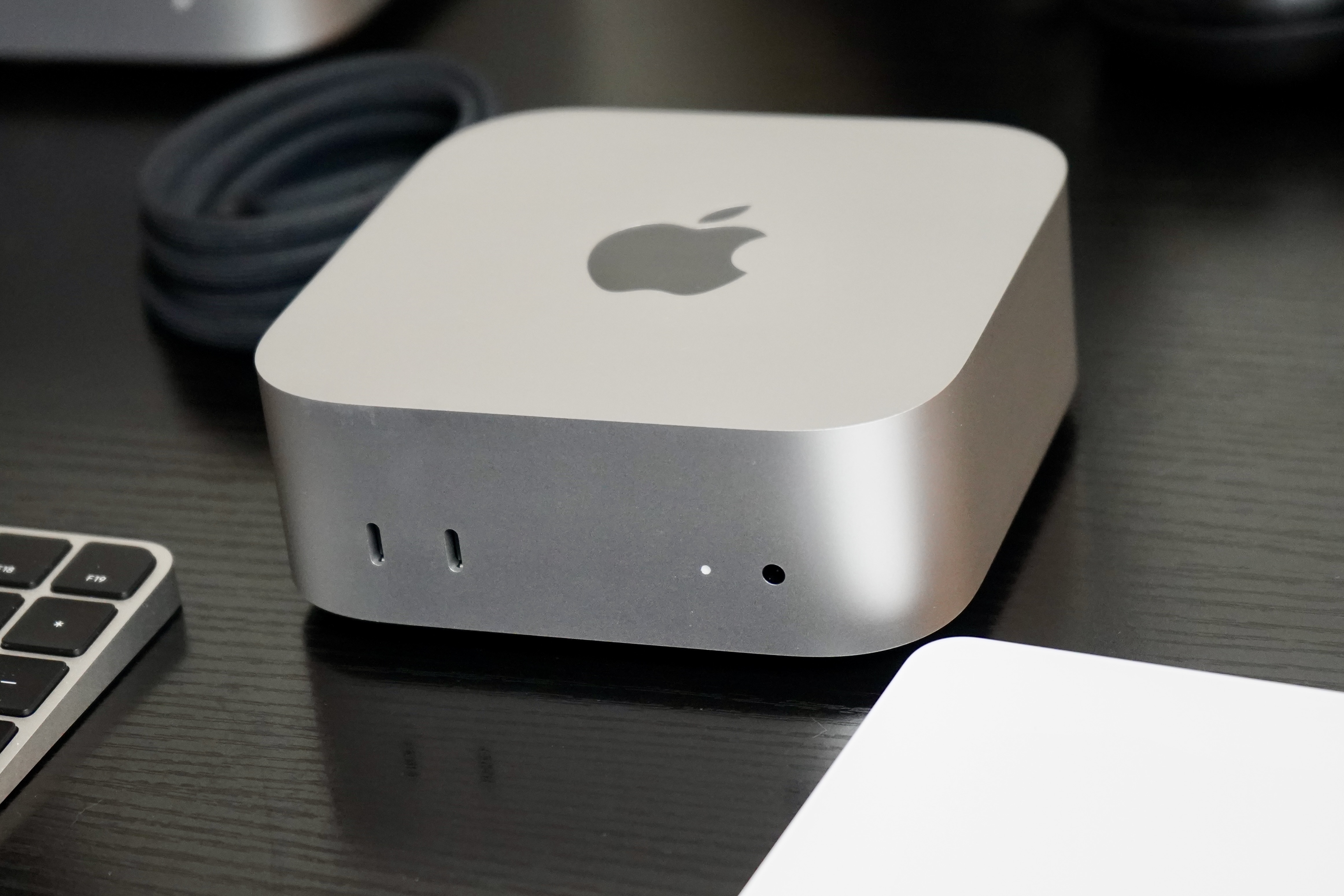
The Mac mini was the last mainstream Mac to get a major redesign, and with the M4, the Apple silicon transition cycle is complete.
Foundry
The new Mac designs aren't directly related to the transition from Intel to Apple silicon, but they show the possibilities that Apple's chips open up. By controlling the entire stack, Apple can design chips and packages that push the boundaries, and the current lineup is the best Apple has designed in years.
There's an app for that
One of the main concerns during the transition from Intel to Apple was software compatibility. Apple solved this problem, for the most part, with Rosetta 2, Apple's software that allowed applications written for Intel to run on Apple silicon. Rosetta2 worked well for a large majority of applications.
Now that more than four years have passed since the transition began, developers have had plenty of time to update their apps so they can run natively on Apple silicon and no longer need Rosetta. You may find apps that don't work on Apple silicon, but the developers of those apps have often abandoned the Mac. And you'll probably find a better replacement anyway.
The M5 is coming
Finally, the upcoming M5 chip actually plays a role in the M4 and the idea that the transition is complete. With its release scheduled for late 2025, it reaffirms a regular release cycle for Apple and Mac. It should deliver a 15-25% performance improvement over the M4 – the typical generation-to-generation improvement we've seen since the M1. It could also be the first M-series chip where the Mac feels “settled,” where everything on each model is in place and feels right for today's customers.
Now that the transition is complete, Apple can focus on bigger upgrades in the future, such as the MacBook's OLED displays and cellular connectivity. Apple didn't just change the chips, completing the transition is why these upgrades can happen in the first place.
Table of Contents


