
WWDC 2025 is fast approaching. The event is considered one of the most important in the world of technology, because Apple reveals its plans for the future of each of its device platforms.
WWDC has never been on new features. This is where Apple defines the direction of its platforms and, often, of all industry. These announcements continue to define how we interact with technology. While we are waiting for Keynote to launch on June 9, look at 10 of the biggest software ads that Apple made during its developer conference.
1. Mac OS X Jaguar (WWDC 2002)
Jaguar was the second major update published for the Mac operating system after Apple went from the classic Mac 9 to Mac OS X. Announced at WWDC 2002, the update stood out not only for its improvements but also for its big name inspired by the cat.
If you have been following Apple for a long time, you probably know that each version of Mac OS X has been named after a feline, like Leopard and Lion. It started with Apple engineers giving internal code names “cheetah” and “puma” to Mac OS X 10.0 and 10.1, respectively, but the public did not know.
Apparently Steve Jobs liked the internal names so much that Apple decided to use them to promote Mac OS X, with Mac OS X 10.2 “Jaguar” the first to be announced with the Feline brand. It was not only the name, however. Jaguar was also a major upgrade with regard to features, because it has introduced graphics accelerated by the GPU for the first time with Extreme Quartz, which also allowed Apple to refine the system interface with smoother animations.

Apple
2. Spotlight (WWDC 2004)
Finding something with projectors on an Apple device seems so obvious these days, but trying to find your files on a computer years ago could be a long and difficult task.
At WWDC 2004, Apple unveiled Spotlight as one of the marquee features of Mac OS X 10.4 Tiger. Unlike other research methods that previously existed, Spotlight has indexed all computer data so that users can easily and quickly find everything they needed. Jobs has attracted all the public with a live demo of projectors, because it has not only located files, but also looked for documents, emails, contacts, etc., users being able to refine their search by specifying a type of date or file.
Spotlight has become a reference for the entire industry, and 21 years later, the functionality is still present on all Apple devices.
3. Dashboard (WWDC 2004)
Also unveiled as part of Mac OS X Tiger, the dashboard introduced an entirely new secondary office which has provided quick access to the widgets. At the time, the idea of having widgets was new. Users could do things like quickly checking weather forecasts and the stock market at a glance without having to open a specific application.
The dedicated dashboard function was finally abandoned by Apple, but the widgets live not only in MacOS, but also in iOS. In fact, the first versions of Apple's iPhone applications, such as weather and stocks, were inspired by these original dashboard widgets.

Foundry
4. Time Machine (WWDC 2006)
Announced on WWDC 2006 as part of Mac OS X Leopard, Time Machine was Apple's solution to facilitate data backup. While in the past, users must have saved their files and applications manually, Time Machine came with the promise of doing everything automatically and periodically.
More than that, Apple also introduced a cool interface that allows users to “travel in time” to recover the previous versions of files, emails and parameters if they lose something. Time Machine is essentially an intelligent backup which users do not even have to think.
Time Machine remains one of my favorite Mac features to date. All you have to do is connect an external disk to your Mac and activate the upholstery in the settings.
5. iPhone SDK (WWDC 2008)
The first iPhone was unveiled at igamesnews San Francisco in 2007, but did you know that he had no app store? The only way to create applications for iPhone at the time was to create web applications compatible with the mobile version of Safari.
Apple quickly realized that it was not the best method, and at WWDC a year later, Jobs announced the first iPhone SDK (the name iOS came a few years later). With the SDK, the developers were finally able to create native applications for the iPhone, opening a brand new world of possibilities. The version of iPhone OS 2.0 that accompanies it also included the App Store, and the rest is a history.
Many applications that we know and all love today have been born because of the iPhone OS SDK. This includes WhatsApp and Instagram, both created by independent developers who wanted to present the potential of the iPhone and the App Store.
6. ICLOUD (WWDC 2011)
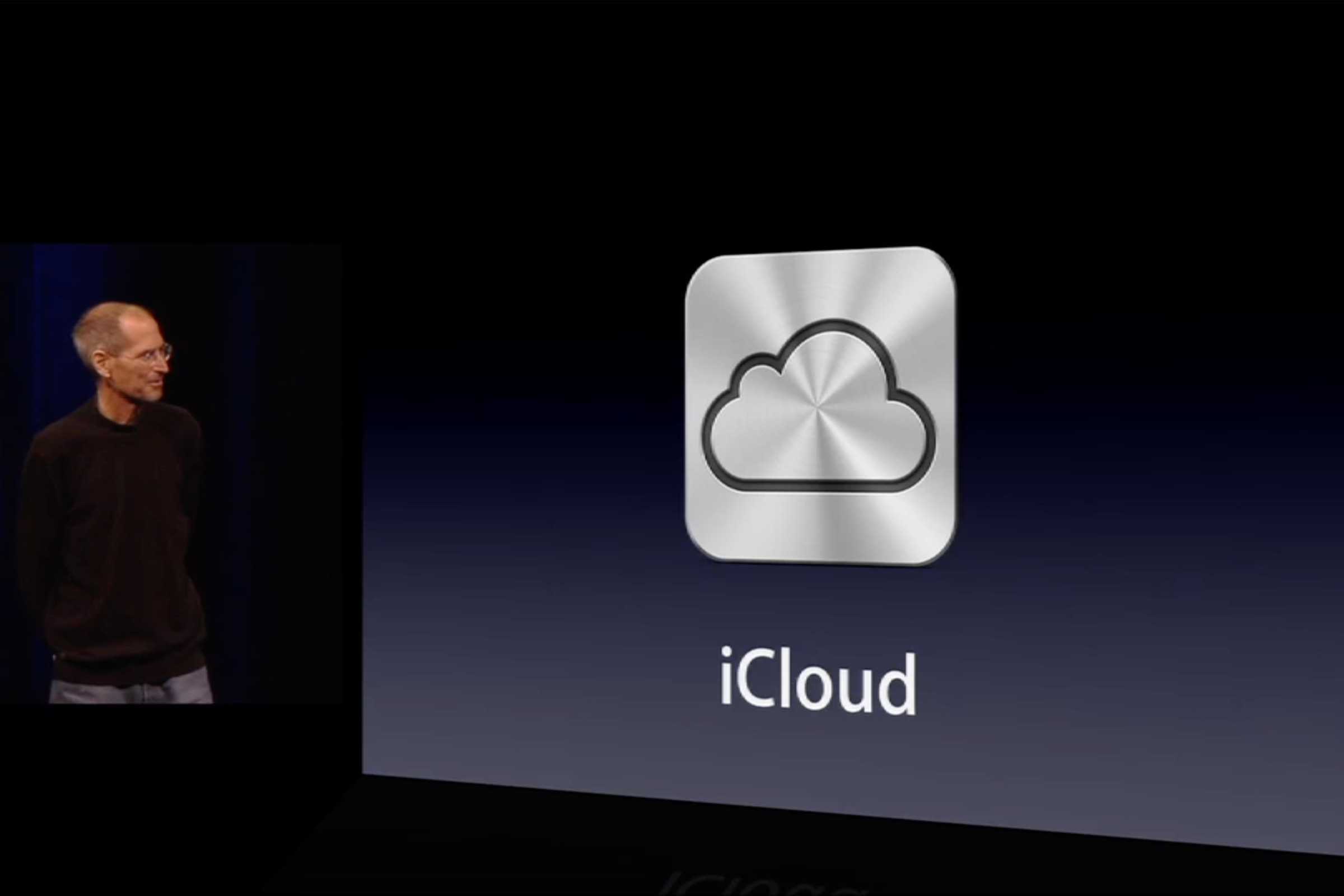
After many problems with Mobileme, Apple has offered a new online service called iCloud – a new platform that obtained the promise not only to repair what the company had hurt in the past, but also to synchronize data transparently between iPhone, iPad and Mac.
Before iCloud, users always needed a Mac or PC to transfer data to an iPhone or iPad, or Vice Versa. Now all our data is available on each device, and everything occurs automatically in the background. ICloud has also paved the way for services like iCloud Drive, iCloud Photos and family sharing.
It should be noted that Icloud was the last Apple product personally introduced by Steve Jobs. The co-founder of Apple did not have much stage time at WWDC 2011 because of his state of health, and he died in October.
Apple
7. IOS 7 (WWDC 2013)
IOS 7 represented the most dramatic visual change in the history of Apple's mobile operating system to date. At WWDC 2013, Apple unveiled a completely flat new interface under the direction of Jony IVE. Skeuomorphic elements with textures imitating real objects have given way to solid colors and white backgrounds.
The new interface has not only transformed the appearance of the iPhone. He has led many other developers to also adopt the flat interface in their applications and websites, creating a new trend not only for Apple platforms, but for the entire industry. But in addition to the new interface, iOS 7 has also introduced many features that have become essential for iPhone and iPad users. These include Airdrop, Control Center and improved multitasking.
Since then, Apple has made other modifications to iOS, but the fundamental principles of the design language introduced with iOS 7 are always present throughout the system. According to rumors, Apple will finally present another major update at the iOS interface this year with iOS 19 – so we may have a new addition to this list.
8. Ipados (WWDC 2019)
In a movement to approach the growing divergence between the iPhone and the iPad, Apple divided iOS in two on WWDC 2019 and introduced an autonomous operating system just for the tablet. Although it is always based on iOS, iPados has added specific and long -awaited features to enjoy the larger screen of the iPad and advanced equipment.
With the updates of iPados over the years, Apple has introduced multi-Windows for the same application, a navigation experience of desktop class, support for external storage in file application, image in mouse management and trackpad, and the possibility of using iPad as Mac with Sidecar. The reports indicate that this year's iPados update will bring better multitasking and more mac type experience.

Foundry
9. Find my (WWDC 2019)
He did not draw attention as Depados, but during WWDC 2019, Apple also introduced a significant improvement in its research service: monitoring of offline devices. Based on a bluetooth signal encrypted from start to finish, the new My Network find allows users to locate iPhones, iPads and even Macs when they are not connected to the Internet.
The iPhone, iPad or Mac sends its location to other nearby Apple devices, so that the owner can see where his devices are via the search for my application. This has not only improved the search for my people and helped people recover their lost devices more easily, but also paved the way for the launch of Airtag, a tiny tracker Bluetooth based on the same technology.
10. Transparency of applications monitoring (WWDC 2020)
It may not be as memorable as iOS 7 or Dashboard, but the transparency of the monitoring of applications was an important addition to iOS which had a huge impact on the industry.
Announced as part of iOS 14 at WWDC 2020, Apple's first pre-recorded event during the pandemic, transparency of applications monitoring (ATT) is a confidentiality functionality that requires applications to request user consent before following them on other applications and websites. ATT radically had an impact on the online advertising market and data collection.
While Apple defended user confidentiality with the transparency of applications monitoring, functionality has been widely criticized by companies, including META, the main income of which comes from user data advertisements.
Table of Contents


