
We look back in time to revel in the original and hilarious story of emoji evolution.
Does anyone remember the funny smilies present in the legendary and unforgettable MSN Messenger? Surely the most nostalgic. What time are those, right? Perhaps some of our younger readers haven’t had the opportunity to meet them… This fact, precisely, already gives us a small idea of how long emojis have been with us. And yes, it is fascinating.
We are entering the year 2023 and the emojis of you iPhone They are almost 15 years old. But they have older ancestors, emoticons. These small graphic representations of our emotions have been with us for a long time, almost since the origins of the Internet.
From iPadízate we wanted to pay homage to emoticons and their successors, emojis, looking to the past to see How have they evolved since their birth?. In fact, they’ve evolved so much that they’ve even become Animojis!
So make yourself comfortable and grab a snack, because some very interesting stories are coming.
The surprising and historical evolution of your iPhone’s emojis
The first iPhone emojis were released in November 2008.when Angela Guzman was just a simple design student who joined the Apple team in order to work on the graphics of the first 500 emojis available for iPhone. However, by then, emoticons had already managed to completely change the way we communicate and express ourselves with our loved ones.
Until recently, it was believed that the birth of emoticons had its origins in the Japanese operator Docomo, which created 175 emojis in 1999. This is the most recognized origin of emojis. However… it’s a false myth, the history of emojis dates back to a few years ago with a firm that was preparing the launch of its phone.
It was the year 1997 when a company called Soft Bank launched a cell phone—at that time, there were no smartphones on our existential plane—that had support for a total of 90 different emoticons. SoftBank emojis were the first. And boy, have they changed since!
They had a very, very, very retro look (and we love it). They were available at black and white although surprisingly, its graphics have a high level of detail. In reality, they weren’t as basic as one might imagine at first.
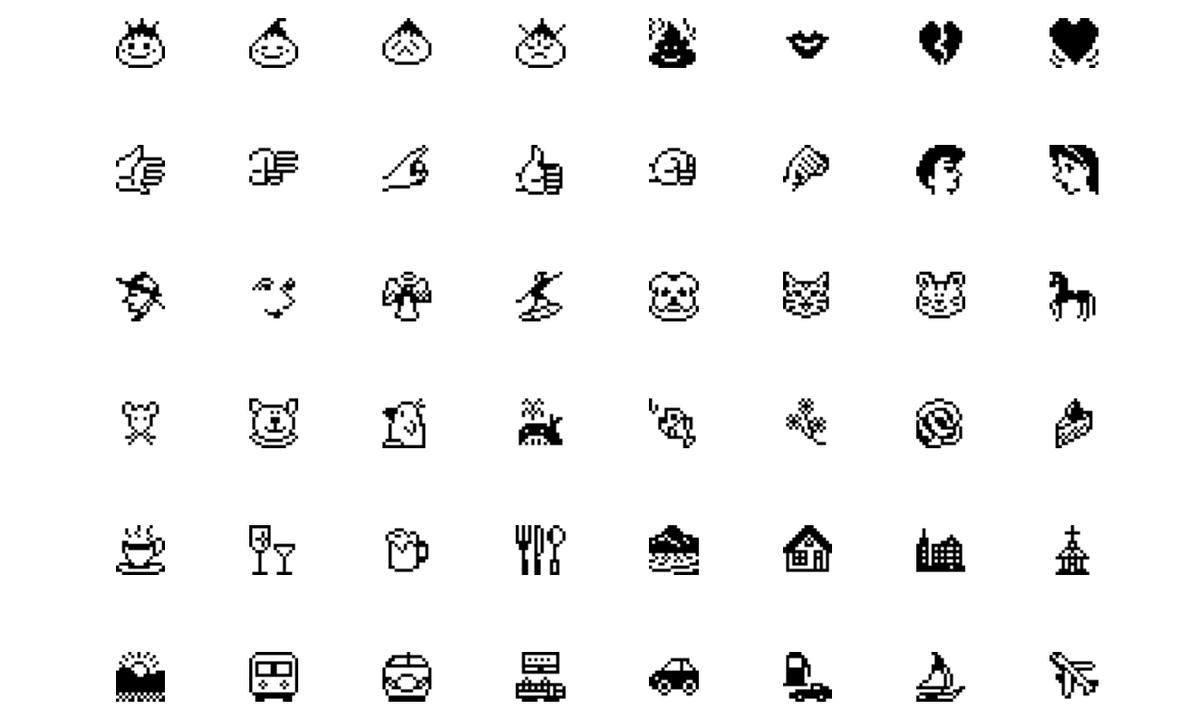
The first emojis in history and…yes, SoftBank also invented the poo emoji
As you can see in the images we’ve attached, SoftBank has created emojis of hearts, faces, animals, food, landscapes, even a football player and a Christmas tree!

SoftBank Emoji | Picture via Emojipedia
There’s no doubt that emojis are much more detailed today than they were a decade ago, but you have to admit that SoftBank has put lots of love and care to the design of the first emojis in the history of the Internet.
The importance of MSN Messenger and other messaging software for emojis
The very first version of MSN messaging service (or Windows Live Messenger as Microsoft will eventually rename it) was released on July 22, 1999. By then, internet users were already getting used to the use of emoticons. They were already invented, yes, but now we needed software – back then there were no apps – with which to share emojis with other people around the world. That’s how we are humans, isn’t it? With this imperative need to share content… After all, sharing is living, right?
“MSN Messenger version 6.0 was released on July 17, 2003. MSN Messenger 6.0 was a major overhaul of the entire platform, updating its simple text-based interface to include customizable elements such as emoticons and avatars personalized.”

User interface of the MSN Messenger program under Windows XP
The truth is that MSN Messenger had much more important than you think in the evolution of emojis or emoticons. A “MSN” which, by the way, became available in the iPhone App Store. Although it passed without pain or glory, the truth was not very successful.
Its desktop version, on the other hand, achieve the highest levels of success in the modern software age thanks to its intuitive user interface and its iconic features such as customization themes for chat windows, video calls, the use of GIFs or animated smileys, funny but irritating buzzes, audio messages, online games, file transfer, freehand drawings and a long etcetera. All this, even if it doesn’t seem like it, has contributed very positively to the evolution of emojis.
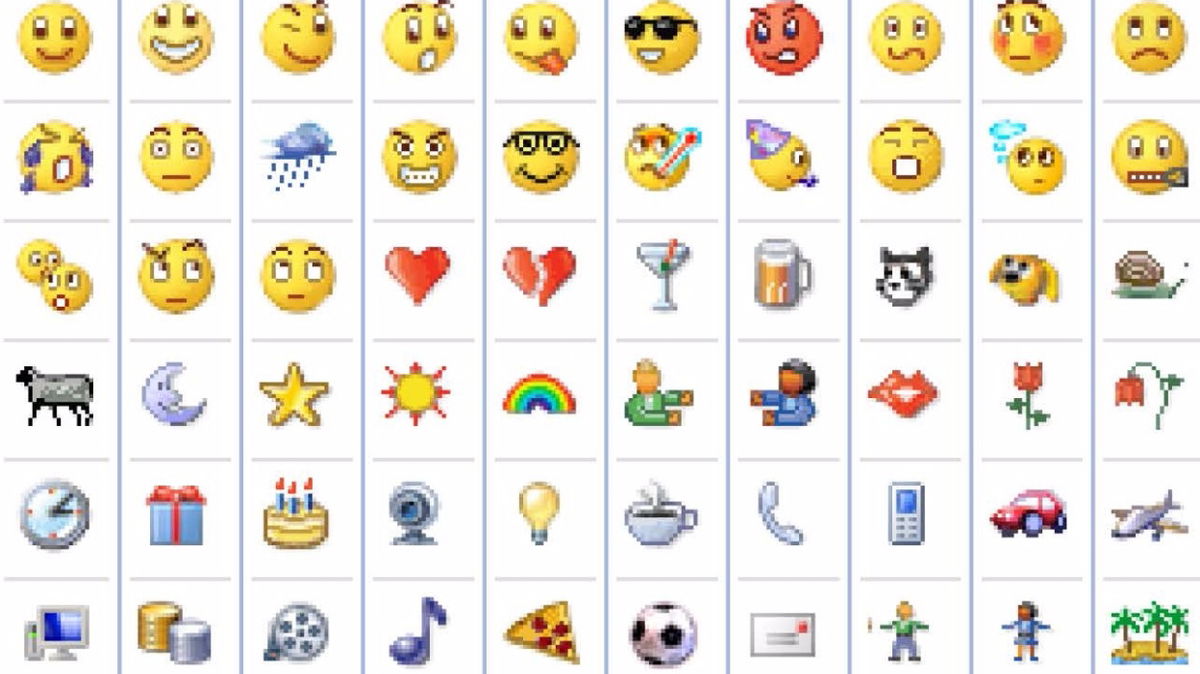
Set of emojis available in MSN Messenger
Either way, the most historic instant messaging software on the planet (courtesy WhatsApp, ¡sorry Mark Zuckerberg!) helped normalize the use of emojis and it allowed us to adapt to how, year after year, emoticons changed and evolved to provide better ways to express feelings on the Internet and virtual sensations.
And, my God, they were cool! Who wouldn’t want to continue using one of these today?
iPhone emojis arrived in 2008

Angela Guzmán showing an emoji on her iPhone
As we had previously predicted, Angela Guzman She was in charge of creating the original iPhone emojis in 2008, with a nice pack of 500 emojis. Years later, the UI designer said she never imagined that iPhone emojis would eventually become so popular around the world.
Gradually, update after update, Apple added more emojis, more variations and more diversity modify existing graphics.
Went with iOS 8.3 when Apple added genders and skin tones to its emojis. Since then, the company with the bitten apple logo has never ceased to bet on diversity in search of a better world:

The iPhone with iOS 8.3 also brought its grain of sand to the evolution of emojis
With the arrival of iOS 9 and from iOS 10.2 many emojis took on a much more realistic three-dimensional look:

Apple updates its iPhone emoji set every year
And so the emojis on your iPhone have continued to evolve until today with the new iOS 16 emojis. Today the emojis are much more detailed, much more realistic and, of course, much more fun .
Now watch how emoticons have evolved in their “social transformation into emojis” since its birth in 1997 until the most recent time in the following image. Evolution is a real scandal, it’s crazy, it’s mind-blowing!
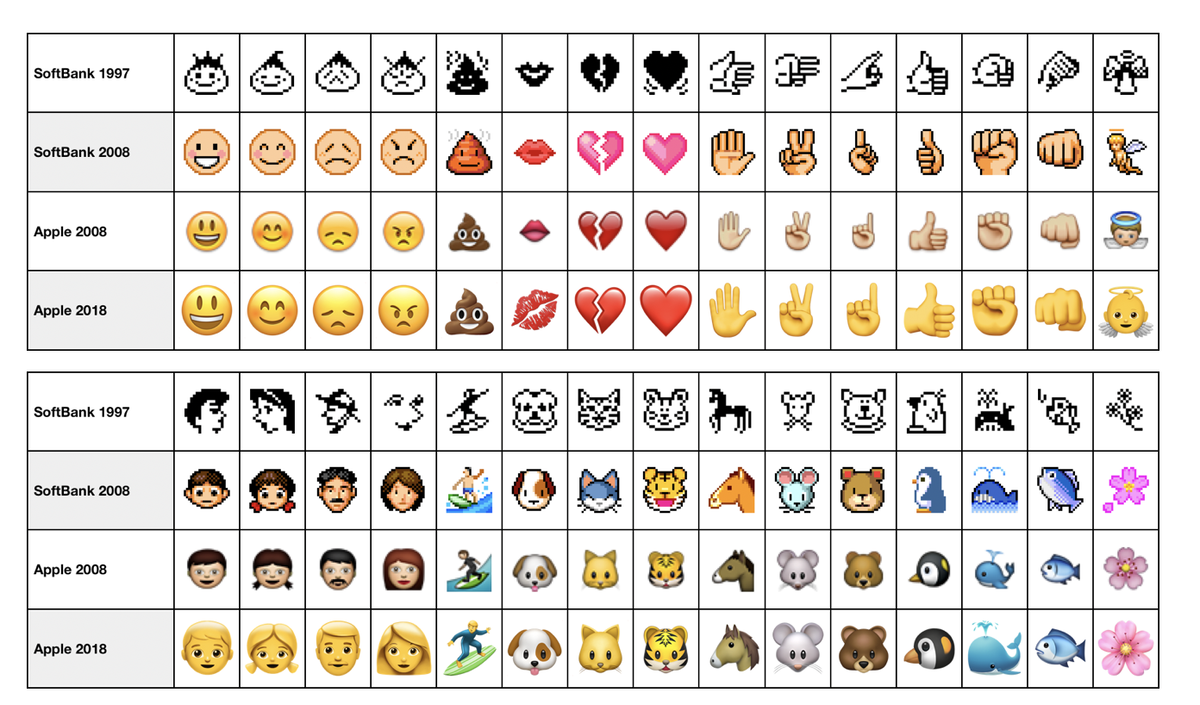
Evolution of emojis from 1997 to 2018
Curiosities and a thousand stories of iPhone emojis
Some emojis are blessed with their own stories that emerged during their design process. For example, the popular “poo” emoji. Did you know it was originally used for do the top of the ice cream emoji?.
I made an amazing emoji discovery, then made a gif of it. We’re through the looking glass, people. pic.twitter.com/aDsZ9s3gEk
— Peter Miller (@peter_miller) March 10, 2015
Other emojis have become popular for other reasons both controversial and entertaining. As in the case of the peach emoji, which is frequently used to imitate a butt due to its irrefutable resemblance to our “innkeeper”.
There are emojis that are even capable of starting a real war on social networks. It happened with the hamburger emoji, which caused a chaotic fire on the internet after the iPhone emoji’s burger had lettuce under the meat and the Google emoji had cheese instead.
the marmorene. Many users have defended their way of assembling the burgers arguing that the meat was slipping on the lettuce and that was really disgusting. While others wondered how the hell Google managed to melt the cheese in the pan so that it ended up face down on the burger. And what’s the right way to assemble a burger? Culinary physics has been put to the vote… with a simple emoji! Absurd gibberish, no doubt.
I think we need to have a discussion about how Google’s burger emoji puts the cheese under the burger, while Apple puts it on top pic.twitter.com/PgXmCkY3Yc
—Thomas Baekdal (@baekdal) October 28, 2017
And… what about the paella emoji on iPhone? An emoji that was born as a seafood paella and that, after much pressure from a large percentage of Valencian users, ended up being an emoji of a Valencian paella. A great victory for our friends at Earthwithout a doubt.
Apple updates its paella emoji and is no longer “rice with things” https://t.co/qV5CaMg5WI pic.twitter.com/MWFX7FBfNq
– Valencia Square (@valenciaplaza) April 13, 2017
Stickers, Animojis and Memojis: the definitive evolution of emoji
The evolution of iOS emojis has even led to other emoticon formats. For example, the Stickers. Gradually, Stickers have become much more popular, and since the introduction of new iMessage features with iOS 10, Stickers have become much more common among iPhone and iPad users.
But things didn’t stop there, nothing could be further from the truth, emojis continue to evolve, so much so… that they have managed to come to life! And how! After the launch of the iPhone X, Apple created the Animojis, some animated emojis that perfectly imitate users’ facial expressions thanks to Face ID facial recognition and which record audio to reproduce the voice of the user. A little later, the company created Memojis with many more customization options.
And all this weird and unlikely evolution of those cute 1997 emoticons brings us to an interesting question which, for now, we’ll answer on another occasion:
What will the emojis of the future look like? 🥲
The next generation of emojis will arrive with the Emoji 15.0 platform in 2023 with pea, fan, jellyfish and maracas emojis, among others.
What do you think of the evolution of iOS emojis? Is there an emoji you wish it would revert to its original design? What’s your favorite emoji on your iPhone?
Table of Contents


