
In this article we will see the different iPhone lenses, what they can be used for and how to use them
Maybe This article will catch your attention if you are about to choose a new iPhone. What's the point of having 2 or 3 objectives in addition to the main one? If you have already purchased an iPhone Pro or non-Pro, With what lens can I take certain photos? We will resolve these doubts in the most practical way possible. We'll break down the current lens types on iPhones and how you can get the most out of them. Recall that the iPhone 16 Pro Max is listed by DXOMARK as the fourth best smartphone camera in the world.
Why is there more than one lens on a mobile phone?
Traditional cameras have always had a lensuntil technology is sufficiently advanced to SLR or DSLR with different lenses that also have fixed or variable focal lengths. In the case of cell phones, if we are not mistaken, only one brand opted for interchangeable modules and one of them was for the camera although it was only one, we're referring to Motorola's Moto Mod Hasselblad.
Nowadays, cell phones already have more than one purpose given how uncomfortable it would be to swap lenses, plus the fact that these aren't simple cameras. In the iPhone, the 7 Plus had a second lens for the first time in its history. It was only with the 11 Pro that a third lens appeared. THE Single-lens iPhones remain today, with the third-generation iPhone SE being the sole survivor.
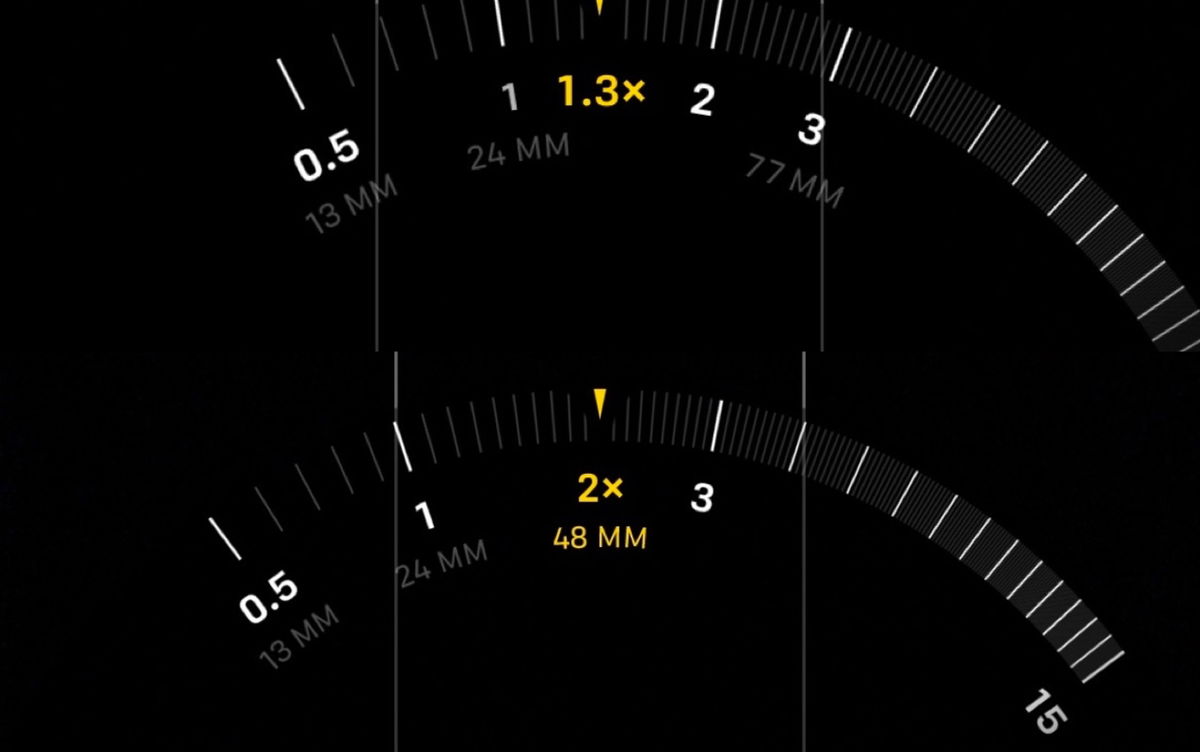
Focal lengths on an iPhone 14 Pro
The technology is pretty good and in the case of the iPhone 15 Pro lenses, it is now possible to use the main lens and take photos with different “virtual” focal lengths. What the iPhone does in this sense is remove the main sensor. On other iPhones equipped with 2 or 3 lenses, the focal lengths can be used by changing lenses. Following we will show you how to use each lens depending on the type of photography you want to take.
The main lens of the iPhone is a wide angle
This is the first option to use and the bestEvery time you open the iPhone camera (unless you already have previous configuration settings), this lens will be available. A photo with this lens would be equivalent to a focal length 24mm.

Wide angle iPhone 14 Pro photo
As long as you can get a better physical approach distance When viewing a person, object, or landscape, it's best to use the iPhone's primary lens. If you are in low light circumstances on the premisessimilarly with the main objective you will get the best result. The latest iPhones already have a night mode with which you can recognize the scene to try to get as much light as possible and make the final result as dark as possible.
The ultra wide angle lens, the best for capturing the most space possible
This is equivalent to having a focal length of 13mm and the viewing angle is simply enormous. This is the best option for capturing group photos or for landscapes that don't fit into the main lens. It has one obvious drawback: when covering a large size, it tends to distort in both the corners and the central part of a photo, depending on the shot.

Ultra wide angle photo iPhone 14 Pro
The latest iPhones have a lens correction featurethis helps to reduce the distortion, it is a question of carrying out the corresponding tests to note the differences. On iPhone 13 Pro models and later, it is also possible to take photos in macro mode. If you want to save a little space compared to the main lens, this is a good option, just remember to take into account the light conditions of the scene.
Telephoto lens exclusive to Pro models
This is where the noticeable differences between the normal two-lens iPhone models and the three-lens Pro models begin.. Its focal length varies depending on the iPhone Pro model, from 52mm to 120mm. The iPhone 16 Pro Max will achieve the best possible focal approach.

iPhone 14 Pro 2x telephoto lens
In the case of iPhone 14 Pro and later, The 2x telephoto option makes a difference on the 48 MP sensor instead of using the 12 MP lens.

iPhone 14 Pro 3x telephoto lens
Lenses in videos, is it good to swap lenses?
Much will depend on what you want to capture via video recording. The options are exactly the same as we saw previously. If you are forced to do an approach, try to do it physically first To avoid losing primary lens quality, choose to start zooming slowly or via the default 2x or 3x options.
On the other hand, you must also Be aware of the focal length you want to use initially. Starting at 13mm is not the same as starting at 24mm, so you need to have a well-defined strategy to achieve exceptional quality recording.

Lock iPhone Camera Lenses When Recording Video
The only drawback of the iPhone in this regard is that it automatically switches between lenses (which you can remove in the camera settings) and en times these lens breaks can be noticed on the premises. We hope that this article succeeded in providing you with new knowledge and that you get the most out of your iPhone in terms of camera.
You can follow iPadized on Facebook, WhatsApp, Twitter (X) or check out our Telegram channel to stay up to date with the latest tech news.
Table of Contents


